FAQs for Flat Rubber Roofing
Find out more about out innovative rubber roofing system with our FAQs.
Click here to:
Expand All /
Close All
-
What is RubberBond EPDM?
RubberBond Ethylene Propylene Diene Monomer synthetic sheet rubber membrane
is a remarkable material that:
- Repels all moisture, snow and rain.
- Is flexible and easily bends with no stress, to follow the contours of the
roof, upstands to walls, check curb edges, skylights, pipes, terminations
into gutters and the like.
- Can stretch with up to 300% elongation, which easily accommodates building
movement.
- Is not affected by extremes of temperature.
- Will not tear, split or crack with age.
- Is manufactured in large sheet sizes from 3.05 to metres wide and up to
15.25 metres long.
-
What does “FleeceBack” mean?
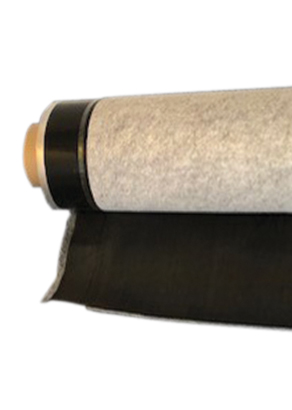
This patented technology laminates a layer of non-woven polyester to the underside of the RubberBond EPDM.
Giving the benefits to the customer of:
- A thicker stronger product
- Over twice the thickness of standard EPDM
- 180%* plus greater tear resistance
- 60%* plus greater impact resistance
- There is no shrinkage or stress to cause leaks at laps, flashings, up stands or other angle changes or penetrations.
Greater than 1.52mm (.060") thick EPDM, standard EPDM is 1.14mm (.045")
-
Are EPDM synthetic rubber roofing membranes new?
- No. The first synthetic rubber membranes, developed in America by Carlisle-Syntec, were laid in the 1960's and are still protecting flat roofs some 50 years later.
- Carlisle provides what no other single-ply manufacturer can -- over 50 years of experience, credibility and reliability.
-
How long will a RubberBond FleeceBack EPDM roof last for?
All evidence, real life exposure, and laboratory tests suggest that when correctly
installed, a RubberBond FleeceBack roof will last in excess of 40
years.
-
How proven is EPDM?
Over One billion square metres of EPDM have been installed worldwide from the glaring sun of the Middle East to the Arctic conditions of Alaska. Over One hundred million square meters will be installed this year.
-
Is RubberBond EPDM synthetic rubber membrane suitable for my flat roof?
RubberBond FleeceBack EPDM is suitable for virtually all flat and low sloping roofs, renewal on an old roof to a garage through to thousands of square metres on new build projects.
-
I’m a roofing contractor. What are the main benefits of using RubberBond FleeceBack EPDM?
Distributed solely by Flex-R Ltd to the UK & Ireland RubberBond gives:
- The fastest, easiest & best looking system to install
- Proven to last for 50 years
- Cold applied adhesives - no fire hazard risk
- Factory Applied Tapes (FAT)- minimising labour involvement, half the
job is done in the factory and without the time consumption of seam welding
- Available in 3.05m widths for fast coverage and 1.52m widths for ease of
access on those awkward jobs.
- Buy direct from the UK distributors with 24 hour nationwide delivery.
- Full training and back up from our technical team. The aim to become an
approved contractor, leaving you a step ahead of the normal roofing contractor.
- See our testimonials for other contractors opinion
-
We have a flat roof on our house. Why should we have RubberBond FleeceBack EPDM installed by an Approved Contractor?
- Still protecting roofs laid some 50 years ago
- Suitable for any roof, small or large
- No heat involved in application, no risk of fire
- No maintenance to achieve it's life expectancy
- Does not become brittle or degrade with age
- Tough enough to walk on for maintenance access, for example cleaning windows
or gutters
- Moss and fungus resistant
- No layer of chippings
- Can be overlaid with a variety of finishes, paving slabs, timber or plastic
decking, green roofs etc.
- Approved contractors are trained and regularly checked to ensure all roofs
are installed to the high standards necessary
-
Why do I need a RubberBond FleeceBack Approved Installer?
No matter how good a product is, quality installation is essential. RubberBond FleeceBack EPDM for your peace of mind is only available from Independent Approved Contractors who have passed a full installation training course.
-
Are all roofing surveys free and without obligation?
Yes. An Independent RubberBond approved contractor offers a full service
including,
- Design and specification
- Written quotation
-
Can I walk on it?
Yes, it's designed for maintenance access.
- For regular access to plant machinery or for a fire escape, use RubberBond
Walkway pads.
- For heavy usage such as patio areas it can be overlaid with a variety of
finishes, paving slabs, timber or plastic decking, green roofs etc.
-
What does RubberBond FleeceBack EPDM look like?
It has a pleasing to the eye, smooth natural slate grey finish.
-
Is RubberBond FleeceBack EPDM environmentally friendly?
RubberBond EPDM is an inert material with limited environmental impact during manufacture and the use of the product.
-
It’s a Dark Colour will that Affect my Property?
Dark coloured membrane out perform white in cool climates, because they attract
and collect more heat, dark coloured roofing materials such as RubberBond FleeceBack
EPDM help building owners save more energy in cooler climates by reducing a
buildings overall heating demand. Black roofs also create fewer carbon emissions
than white roofs in these cooler climates because of the reduced heating demand
they create.
In northern European countries e.g. UK & Ireland, heating accounts for a
significantly larger percentage of total-building energy consumption than air
conditioning. So reducing heating consumption is more critical to energy savings
than reducing air conditioning usage, especially in cooler climates where heating
degree days (HDD) outnumber cooling degree days (CDD).
Of course, insulation is the proper key to any energy efficient roof system,
regardless of membrane colour.
-
What is the standard method of installation?
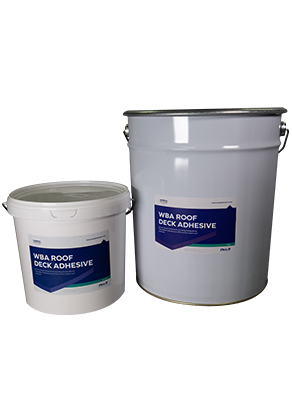
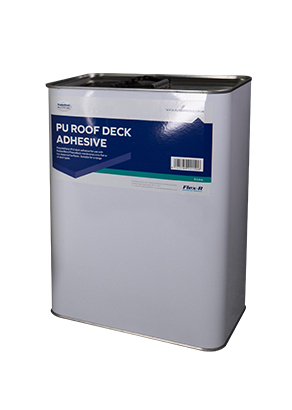
For one of the strongest fully adhered single-ply installations in the industry specifiers are recommending RubberBond FleeceBack system. For new and reroofing installations adhesive is roller applied to the deck and the FleeceBack membrane is rolled into the adhesive. Seams are sealed with Factory Applied Secure Tape (FAT).
-
What is FAT?
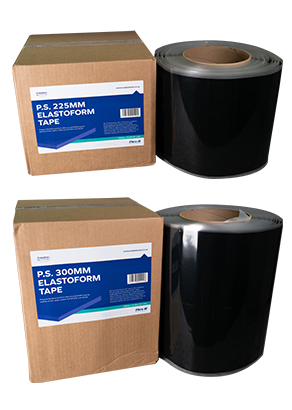
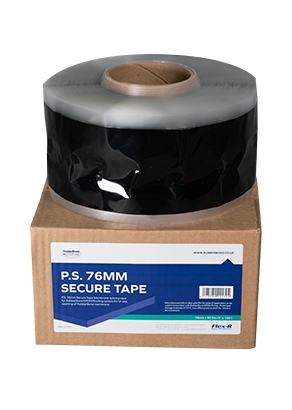
Factory Applied Tape seam tape is an industry leading engineering breakthrough. It increases the safety, reliability, consistency and speed of application.
-
Is RubberBond FleeceBack EPDM expensive?
No, despite its considerable technical advantages it compares well with other quality roofing systems and because of its long life span it will often work out to have a much cheaper life cost.
-
If RubberBond FleeceBack EPDM is so good why isn’t everyone using it?
The manufacturers have invested millions of dollars in manufacturing processes
and branding. To protect these investments only trained and approved installers
that have proved they can maintain the highest of standards are allowed to use
the material. This has until recently been predominantly in the commercial sector,
but is now at last also available, through approved RubberBond installers to
residential properties utilizing the RubberBond FleeceBack EPDM roofing system.
-
Does RubberBond FleeceBack EPDM have a British Board of Agrément certificate?
Yes, it holds the coveted British Board of Agrément certificate No. 02/3967

-
I need my roof replaced; do I need my INSULATION upgraded?
Insulating a flat roof can deliver real benefits; a warm comfortable room,
lower energy bills and improved HIPs ratings. Building regulations can mean
insulation is compulsory.
In April 2006 the revised Part L of the building regulations came into force,
this has the aim to reduce energy used in buildings. The key requirements are:
- Reduce energy used in buildings by at least 20%
- In most refurbishment instances additional thermal insulation is required
to meet the required "U" value. If such an upgrade is not technically
or functionally feasible or would not achieve its pay back within 15 years.
There are essentially two designs used in the construction of a flat roof with
insulation.
Cold deck
This is the most common construction but is also the least thermally efficient.
From the room ceiling up the build is as follows: The roof joists support the
roof construction the internal ceiling is attached to these, between the joists
in the roof void insulation is laid in buildings constructed in the 60s, 70s,
& 80s, there will most likely be some type of insulation between the rafters
in the roof void. On top of the joists the roof deck is fixed and the waterproof
roof cover is laid.

Warm deck
This is the most modern method of construction and should be used were possible
(although not all situations are able to accommodate this design).
From the room ceiling up the build is as follows: The roof joists support the
roof construction the internal ceiling is attached to these. On top of the joists
the roof deck is fixed. A vapour barrier is laid on to the deck. And the appropriate
thickness of insulation is fixed to the roof deck. The waterproof roof cover
is then installed.
This method of insulating the roof alleviates the formation of condensation
in the roof void, and complies with the current building regulations.

-
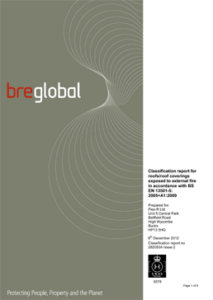
What are the fire ratings for RubberBond FleeceBack EPDM?
The fire ratings range in accordance with the build up of the roof please se
below for the relevant construction and rating.
- As stated in the BBA certificate No.02/3967 RubberBond® FleeceBack EPDM
has rating of Ext FAA as per BBA certificate. This relates to the following
roof construction of steel deck, vapour barrier, PIR/PUR insulation &
RubberBond® FleeceBack.
Tested in accordance with BS476 -3
The above build up is mainly for commercial type properties so the ratings
would be misguiding for domestic type buildings. In 2005 we ran further tests
on typical residential style roofs and the following ratings were achieved.
- Ext FAC Typical warm roof construction; OSB deck, vapour barrier, insulation
& RubberBond® FleeceBack
- Ext FBC Typical cold roof construction; OSB deck & RubberBond® FleeceBack
Test to BS476 - 3: 2004 External Fire Exposure test
Tester - Warrington Fire Research.

A boundary is defined in the Building * Regulations as the boundary of land
belonging to the building up to and including the centre line of any abutting
street, canal or river.
(1) Not acceptable on any of the following buildings:
- Industrial, storage of other non-residential purposes group buildings of
any size:
- Houses in terraces of three or more houses:
- Any other buildings with a cubic capacity of more than 1500m³.
(2) Acceptable on buildings not listed in Note 1, if part of the roof is no
more than 3m² in area and is at least 1500mm from any similar part, with
the roof between the parts covered with a material of limited combustibility.
- To achieve EXT. FAA regardless of the substrate the membrane should be covered
with smooth, shard free pebbles.
-
What warranties are available on RubberBond FleeceBack EPDM systems?
There are a range of warranties available for the RubberBond membrane dependant
on the property size from standard guarantee below to the 20 year commercial
warranty.
RubberBond flat roofing is installed, solely by authorised roofing contractors,
who are responsible for the integrity and performance of the finished roof.
Where stated a RubberBond contractor will issue a 20 year guarantee for
your flat roof.
The RubberBond EPDM flat roofing system is guaranteed for a period of
20 years to prevent the ingress of rain or snow subject to the following exclusions:
- Storm damage such as falling roof tiles, trees, etc.
- Roofing damage caused by lightning, fire, hurricanes or earthquake.
- Deliberate or accidental damage.
- Defects in adjoining areas such as defective tiles and coping stones, pointing,
porous brickwork or render.
- Deficiencies or movement in the building structure.
- Damage caused by the leakage of fuels or oils.
- Any claims under the guarantee that are found not to be the RubberBond
EPDM membrane or the labour relating to it are chargeable as an inspection
fee.
- The RubberBond EPDM flat roofing guarantee is valid when signed by the contractor
and full payment has been received.
-
Is EPDM environmentally beneficial?
EPDM is one of the most sustainable and environmental materials used today in the construction industry. Its excellent performance transfers to low life cycle costs and less impact on the environment.
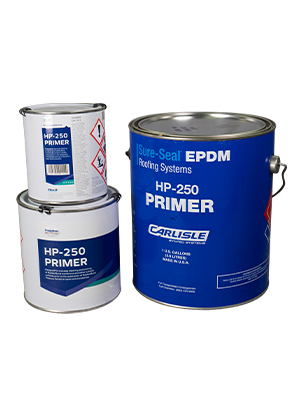
The initial production of the membrane has a low embodied energy number (the amount of energy required to produce and implement a product from material extraction, manufacture, and installation). In addition several other components (such as cleaners, primers and adhesives) were developed for use with the EPDM membrane to reduce VOC (Volatile Organic Compounds) emissions during installation.
Post-industrial products can be reincorporated (recycled) into the manufacturing of other roofing products and accessories (i.e., walkways and roofing tiles) thus minimizing the impact on landfills.
-
When were the first EPDM roofs installed?
The first Carlisle EPDM roof was installed in the 1960’s in Chicago, the first Firestone EPDM roof was only installed in 1980, leaving them with 20 years less experience in the roofing membranes market.